
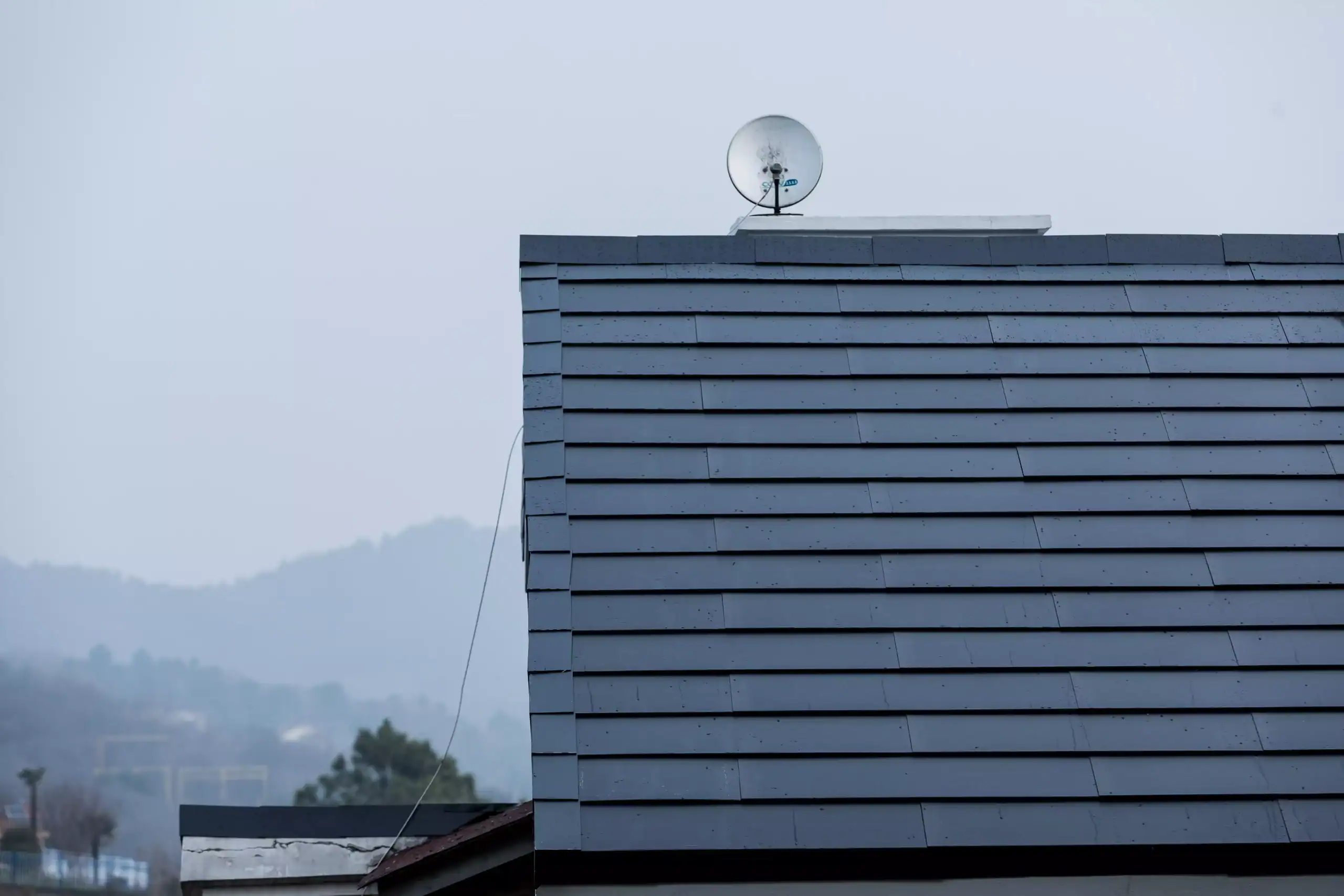
A solar roof tile is a product. A solar roof system is the coordinated roof package that makes a building weatherproof and generates electricity. The distinction matters to distributors, installers and project buyers because a shipment of active PV tiles alone normally cannot complete a real roof layout.
This guide explains the difference from a manufacturer’s perspective. It is not a substitute for local structural, electrical, waterproofing or permitting review; the installation team must confirm those requirements for the project country and building.
Start with the basic distinction
An active solar roof tile or solar sheet contains photovoltaic cells and produces DC electricity. It covers only the parts of a roof where power generation is practical.
A complete solar roof system combines those active elements with matching non-generating roof elements, edge details, water-management parts, electrical connections and project documentation. The goal is a continuous roof surface rather than a group of solar products placed on top of a finished roof.
| Term | What it does | Why a buyer should care |
|---|---|---|
| Active solar tile or sheet | Generates electricity | It defines the power-producing area, but it may not solve edges, hips, valleys or small roof sections. |
| Inactive matching element | Completes non-generating roof areas with a coordinated finish | It allows the roof geometry to be completed without mixing visibly different materials. |
| Solar roof system | Combines active and inactive roof elements, details and project support | It is the scope that a roofing or installation team can evaluate as a roof package. |
| BAPV panel installation | Mounts photovoltaic panels above an existing roof | It may be appropriate for many projects, but it is a different roof and installation approach. |
What is normally included in a complete system?
The exact package changes with roof geometry, local practice and product line. A buyer should nevertheless expect to discuss the following categories before asking for a quotation.
1. Active power-generating elements
These are the glass solar tiles or metal solar roof sheets that convert sunlight to electricity. Their number, arrangement and electrical grouping depend on the available roof planes, shading, capacity target and local electrical design.
2. Inactive coverage and roof-completion elements
Every roof has areas that should not or cannot generate power. Matching inactive tiles, sheets or closure pieces make it possible to complete those areas while preserving a coordinated surface. This is often where the difference between a product sample and a practical roof package becomes visible.
3. Edge, ridge, valley and flashing details
Ridges, rakes, eaves, valleys, wall connections, penetrations and skylights need roof-side detail. The correct components and the local installation method should be reviewed together; a generic active tile does not automatically solve these conditions.
4. Roof base and waterproofing layers
Depending on the system and project, the roof build-up may include battens, membrane, radiant barrier, drainage details or other substrate layers. These materials and their local specification must be agreed with the roofing team rather than assumed from a product photograph.
5. Electrical connection scope
Solar roof systems require a defined electrical path from active elements to the rest of the PV system. Buyers should clarify the connector type, cable routing concept, protection devices, inverter interface and which party is responsible for final electrical design and grid connection.
6. Drawings, packing and project documents
For a B2B order, the document scope is part of the system. Typical discussions include component schedules, roof layout inputs, packing information, installation notes, available data sheets and the documents needed for the target market. Do not assume that a public brochure covers every project-specific requirement.
Why the distinction changes sourcing decisions
If a buyer requests only a wattage and a unit price for an active solar tile, important roof questions remain unanswered. The following comparison is a useful starting point for supplier conversations.
| Buyer question | Tile-only answer | System-level answer |
|---|---|---|
| How is the roof perimeter finished? | Not defined by the active tile alone | Ridge, edge, eave and flashing scope are reviewed. |
| What covers small or shaded roof areas? | May require a different material or site improvisation | Matching inactive elements are considered in the layout. |
| Who coordinates waterproofing details? | Often left open | The supplier defines component scope; the local roofer confirms execution. |
| What arrives in the shipment? | A quantity of PV tiles | A component schedule, packing discussion and project-specific supply scope. |
| What should be sent for a quote? | A requested tile quantity | Country, roof geometry, estimated area, product interest and project timing. |
Solar roof system and BAPV are not interchangeable
A building-integrated photovoltaic roof is designed to act as part of the roof envelope. A building-applied photovoltaic (BAPV) installation generally places panels on a separate mounting structure above an existing roof. Neither approach is automatically better for every project.
A solar roof system may be appropriate when roof appearance, integrated coverage, a new-build or re-roofing programme, and coordinated roof-side details are central to the decision. BAPV may be appropriate when an existing roof is in good condition and the project prioritises a conventional panel installation. The correct choice depends on building condition, local requirements, budget, generation goals and installer capability.
For a broader comparison of these approaches, see Solar Roof vs Solar Panels.
What to send before asking a manufacturer for pricing
A useful first message does not need a finished drawing. It should include enough information to identify whether a complete package is realistic.
- Project country and delivery location.
- New build, re-roofing or retrofit status.
- Building type and estimated roof area.
- Roof photos, a sketch or drawings if available.
- Product interest: glass tile appearance, metal sheet coverage, or an open comparison.
- Target project timing and the buyer’s role: distributor, installer, contractor, developer or project owner.
The manufacturer can then discuss product fit and possible supply scope. The local design, permitting, structural checks and final electrical work remain project responsibilities that must be addressed in the target market.
Next step: review the full supply scope
To see how active elements, inactive coverage, trim, flashing and accessories are grouped, visit the complete solar roof supply scope. If you have a project location and roof information, you can also start a WhatsApp project discussion.