
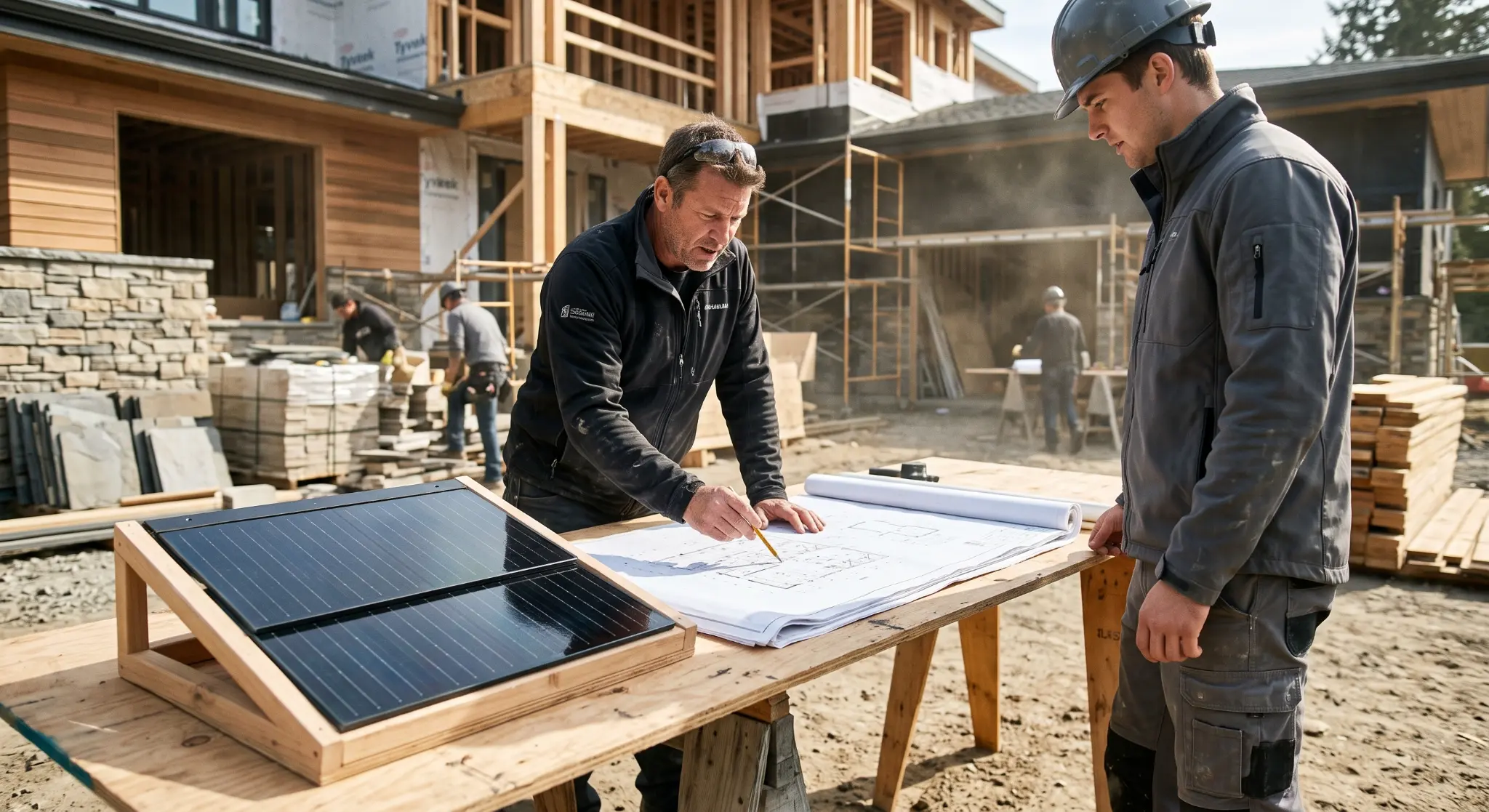
We regularly hear from ambitious partners who want to start with minimum order quantities or exclusive distribution rights. Our starting point is different: let’s complete a well-prepared pilot project first. This is not a way to push a prospective partner away. It is how both sides learn whether the product, roof type, installation workflow and local market are a sound fit before making a long-term commitment.
A solar roof is not a ready-to-use consumer product. It is an engineered roof-and-power system. The project team needs to understand how active photovoltaic elements, matching non-PV elements, roof-completion parts and electrical planning work together on a real building.
1. Start with a real project, not an abstract territory
A pilot needs a real building or a real customer opportunity. It may be your own building, a demonstration property or an approved client project, but it needs a physical location and enough basic information to begin a practical discussion.
The first conversation should establish:
- Project country and delivery destination.
- New-build, re-roofing or existing-roof project status.
- Approximate roof area, roof type and pitch.
- The buyer’s intended product direction and target system capacity, if known.
- Expected project programme and the local roofing and electrical teams involved.
A distribution agreement cannot replace this project input. A pilot lets both teams identify the actual questions that will arise in the target market.
2. Roof drawings turn an interest into a workable layout
For a preliminary layout and quotation discussion, architectural drawings are especially helpful. They should show roof dimensions, slope orientation, ridges, valleys, penetrations, skylights and other conditions that affect the roof surface. Roof photos and a clear sketch can support an early conversation when complete drawings are not yet available.
These inputs help the manufacturer-side team discuss the active and matching product allocation, roof-completion components and the questions that need confirmation before materials are specified. Orientation, shading and the buyer’s power objective are also part of the early system conversation, but a final energy estimate or electrical design belongs to the confirmed project and qualified local professionals.
3. A pilot quotation must describe the system, not only the active product
A useful pilot quotation is more than a count of power-generating tiles or sheets. The project needs a clear discussion of the complete roof package: active elements, matching inactive coverage, trims, transitions, accessory categories, packing and the manufacturer-side documentation that is available for the selected system.
The exact bill of materials, electrical string concept, inverter interface, shipping configuration, commercial terms and lead time are confirmed only after the roof inputs, destination and scope are known. Local teams remain responsible for the site-specific roof substrate, weatherproofing method, structural review, electrical design, permits, inspections and grid requirements.
4. Use a ground mockup before the roof installation
Before moving directly to the roof, we recommend that the installation team opens representative components and builds a small ground mockup or training frame where appropriate. This gives the crew time to understand handling, sequencing and the relationship between active elements, matching elements and roof-completion parts before work begins at height.
The purpose is practical learning, not a substitute for local roof planning. A ground mockup should follow the current documentation for the supplied system and should be reviewed alongside the local roofing and electrical plan.
5. What a successful pilot gives a future distribution partner
A pilot project produces evidence that a future commercial relationship can use. It helps the partner understand the product-fit discussion, the information needed for a quotation, the roof-side and electrical coordination points, packing and delivery questions, and the training or support needed for the next project.
It also gives both sides a chance to identify what needs to be adapted for the local market. That may include local code review, architectural preferences, installer capability, logistics, sales support and the documentation buyers request before committing to a larger programme.
Distribution follows demonstrated project readiness
We welcome serious distribution conversations. The strongest foundation is a completed or clearly progressing pilot project with real inputs, a defined scope and a team that has learned the system on an actual job. In our view, a sustainable distribution relationship grows from that shared project experience—not from an exclusivity clause signed before either side has tested the delivery path.
Next step
If you have a building, roof photos or drawings, project location and an initial timing in mind, contact Sunlit Solar Roof to discuss whether a pilot project is a suitable first step. You can also review the complete solar roof supply scope before the conversation.