People often ask me if our remote guidance model actually works. It’s a fair question. What if you spend a lot of time and money, only to get stuck with an installation nightmare halfway across the world?
Today, I’ll walk you through a real project. We worked with a client, Mr. O, to build our flagship Lumina Slate roof on his estate. It turns out, installing a high-tech roof from a distance is a lot like putting together flat-pack furniture—if you plan it right.
The Problem: Power Outages in Winter
Mr. O builds high-end custom homes. He made his money in telecom and real estate, so he knows how things should be built.
For his massive new estate in North America, he was building a large private gym. The area gets great sunlight and electricity is cheap. But when severe winter storms hit, the power grid goes down. Waiting in the freezing cold for the power company to fix things is simply bad business.
His solution was to get ahead of the problem. He wanted a premium solar roof and a massive battery system to keep the lights and heat on, no matter what the weather did.
The Drop Test
A year before we started the project, we sent him some product samples. He was worried about local hail and wanted to know if the tiles would hold up.
When he got them, he liked the texture and understood how our active solar tiles and passive glass tiles fit together. But to be absolutely sure, he took a heavy stainless steel water cup and smashed it directly onto the tile.
No scratches. No cracks. That simple, physical test eliminated his doubts, and we officially got to work.
Doing the Math
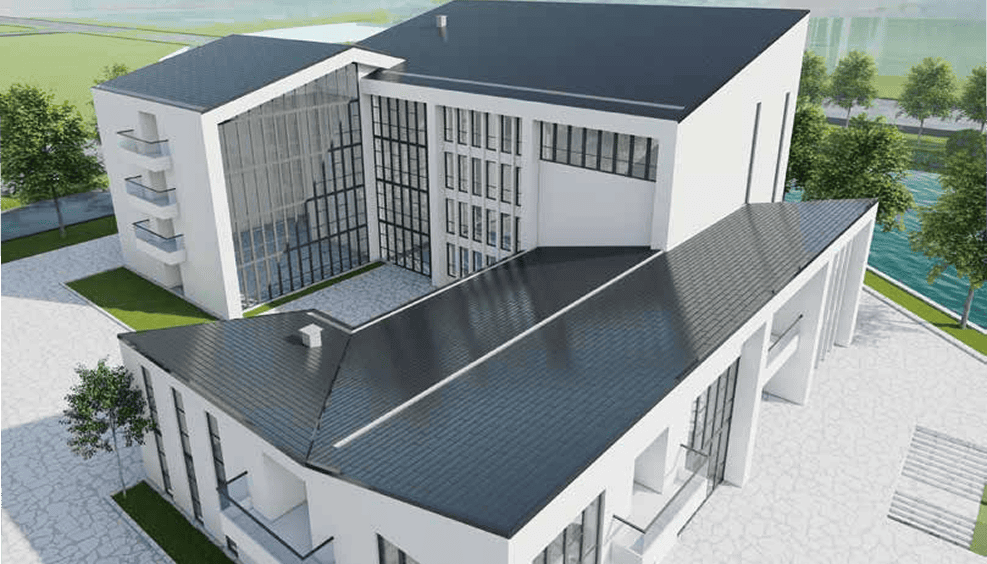
The new gym was big—about 800 square meters. To make the solar roof work perfectly, he changed his original flat roof design to a 16-degree pitch. He calculated the dimensions down to the millimeter to make sure the glass looked completely uniform.
We ran the numbers. The roof was big enough to hold 140kW of solar capacity. But 140kW is commercial scale. It requires 3-phase inverters, which conflicted with his estate’s single-phase grid. Also, the north side of the roof would only generate 60% of the power compared to the south side. Maxing out the roof would be a waste of money.
Our Solution
We kept the design smart and practical:
-
Smart Placement: We put 75kW of active solar tiles on the south face. On the north face, we used our matching passive glass tiles. It looks identical but saves money.
-
Backup Power: We used four 20kW hybrid inverters running in parallel, leaving 5kW as a safety buffer. If one unit breaks down, the system automatically isolates it and keeps the power flowing.
-
Massive Storage: We installed a 240kWh battery system. It easily runs the gym’s AC and drops the daily power bill to zero. During a winter blackout, it can power the critical circuits for weeks.
Factory Testing and Shipping
We don’t guess when it comes to quality. In our factory, every single solar tile gets tested under simulated sunlight to make sure there are no micro-cracks or dead spots.
We packed everything securely in wooden crates with shock-absorbing layers. It took 25 days to produce and 45 days to ship across the ocean. Everything arrived safely. The inverters and batteries went indoors, and the roofing materials were staged outside.
The Installation
His local 4-man roofing crew watched our tutorial videos to understand the materials. Before they went up on the roof, they did a dry run on the ground with just 5 tiles to figure out the spacing. It really was that simple.
They laid the base layer—including our aluminum thermal foil for better insulation—and started on the north slope with the plain glass tiles. This allowed them to find their rhythm without worrying about wiring. It took about a week.
Then they moved to the south face. They used the exact same process, simply connecting the solar tiles into 27 strings and testing the connections with a multimeter as they went.
A Broken Tile and the Finish Line
We only had one minor issue. A worker accidentally hit a glass tile with a sharp tool and shattered it. The client was briefly worried.
But we anticipate these kinds of job-site accidents. That’s why we had already shipped 8 free spare tiles with the order. By the end of the project, they still had 4 spares left over.
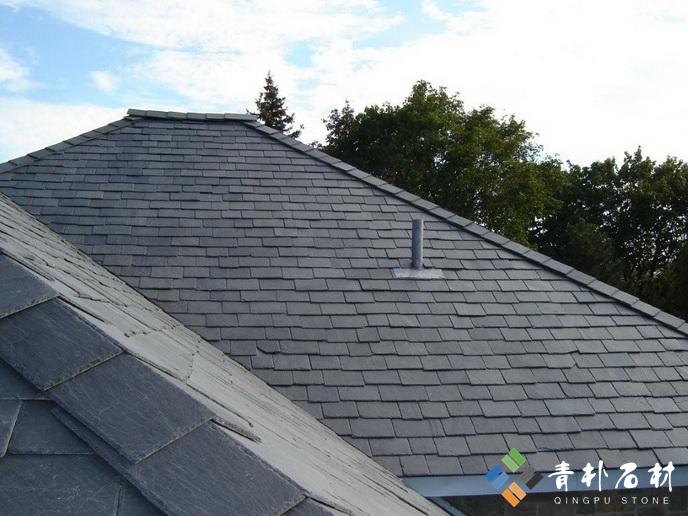
Once they double-secured the roof ridges, the structure was complete. Under the sun, the anti-glare glass looked like high-end luxury slate. When I asked Mr. O for feedback, he gave me the highest compliment a serious businessman can give: “I think it’s fine; you see I haven’t caused you any trouble.”
Keep It Simple
We purposely didn’t install the inverters and batteries right away. Construction dust from interior drywall work will ruin electronics.
Instead, we pre-assembled and tested the electrical equipment at our facility. When the house is fully finished, his local electrician just needs to swap a few cables to bring the system online.
Summary
Good planning makes hard things easy. This project proves that with the right support and well-designed products, installing a high-tech solar roof anywhere in the world is a straightforward process.