We all know how business works. You meet complex needs, and you get rewarded for it. When millions of those needs converge, they create a gigantic market packed with opportunities.
Most people normally don’t care about geopolitics. We all have our own lives to run and bills to pay. Energy security sounds like someone else’s problem. But when gas prices and grocery bills spike at the same time and start choking your daily life, people wake up and ask what exactly is going on.
A Fragile Global Trade Network is Pushing Up Everyone’s Living Costs
All the problems point to one root cause, which is our fragile globalized world. More than 70 years of post-WWII peace built a massive trade network that allowed oil and gas to flow freely from major producers like the Middle East, the US, and Russia to the rest of the world. Cheap, endless fossil fuels became the bedrock of modern life. They power our grids, move our cars, and act as the raw material for everyday plastics.
Before the current crises, most people didn’t even think about this. But when war threatens to lock down the Strait of Hormuz, everything changes. That single strait handles about 20% of the world’s oil and LNG. If that stops, prices don’t just go up 20%. They skyrocket to a price that desperate countries simply cannot afford. Manufacturing powerhouses like Japan or Korea could see industries grind to a halt because they can’t get raw materials like naphtha to make plastics, and ordinary citizens might be forced to ration gas to just five liters a day.
How the 1970s Oil Crisis Birthed the New Energy Market
It feels exactly like a replay of the 1970s oil crisis. Back then, the OPEC embargo sent oil prices to the moon, caused massive inflation, and froze the global economy. To secure energy, the world shifted. The US fought the Gulf War and tied oil to the dollar, Europe figured out offshore drilling in the North Sea, and the Soviets pumped more oil.
There is a fascinating historical detail from that era. Solar technology had just been invented. It was incredibly expensive and barely worked, but governments used it to sell hope. In 1979, the US President even put a $28,000 solar water heater on the White House roof. Europe started pushing green energy. Gas-guzzling American cars died out, and fuel-efficient Japanese cars took over the roads. This wasn’t because everyone suddenly wanted to save the environment. It was because brutal fuel prices forced people to find alternatives.
The Geopolitical Premium Will Ignite the Electrification Revolution
Today is the sequel. We have been at peace for so long that we thought fossil fuels would always be cheap. No matter how the current conflicts end, the geopolitical premium is here to stay. Whether it is paying expensive transit fees for oil tankers or buying peace in the Gulf, those extra costs are going straight onto your gas receipt and your monthly power bill.
This pain will force nations to figure out how to produce their own energy at home. This is solar’s next historical moment. Except this time, it is not an expensive lab experiment, but a highly mature technology ready for the real world. The world is accelerating its shift from a fossil-fuel society to an electricity-driven one, and the markets for solar, EVs, and home battery storage are about to explode.
Massive Market Demand Will Force Products to Evolve and Specialize
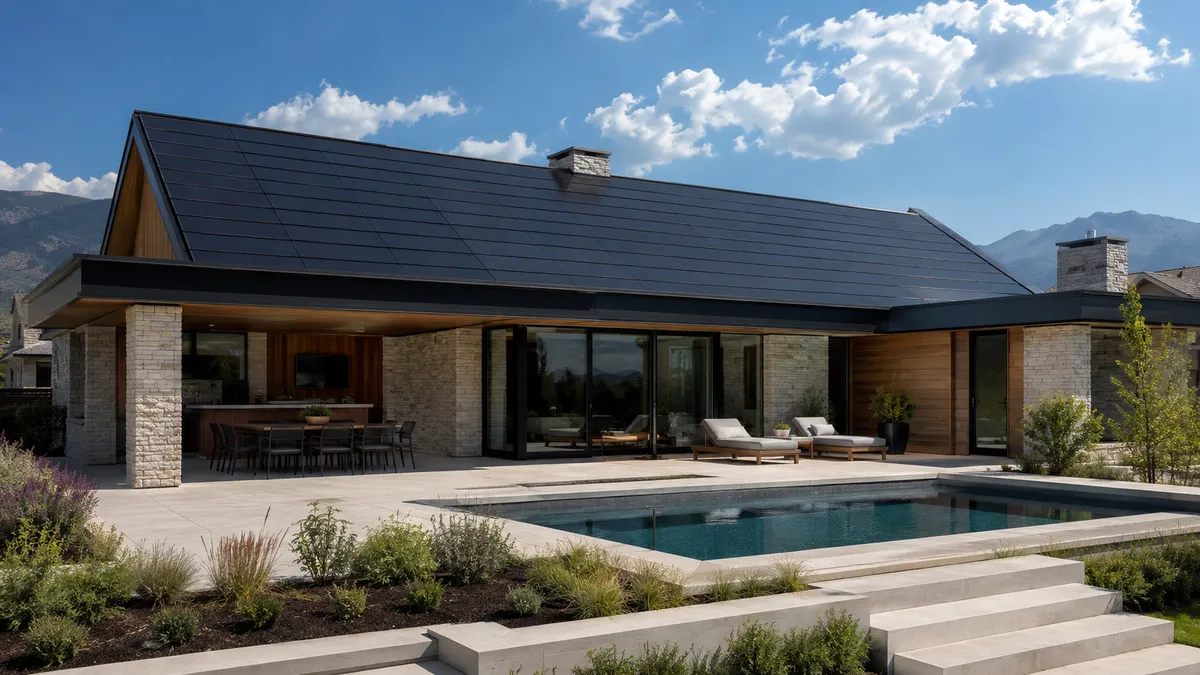
Here is a basic business rule. When a market gets this big, products evolve. Think about early cars. The Ford Model T eventually splintered into sedans, SUVs, and minivans. Solar is doing exactly the same. Traditional blue solar panels will get bigger for massive utility-scale farms. But for residential homes, solar systems must evolve to integrate seamlessly with the architecture to meet the massive future demand for self-sufficient buildings.
In a future with widespread inflation, premium real estate prices will likely keep rising. The people buying these homes are the wealthiest in society. When these top-tier buyers want the security of energy independence, do you think they will want cheap blue panels bolted onto their beautiful roofs, or will they prefer a sleek, perfectly integrated luxury solar roof? The answer is obvious.
The future is full of uncertainties, but the decentralization of energy is the only absolute certainty. Integrating high-end solar roofs into your building projects early on is not just about adding a building material. It is about building a solid fortress of certainty for your consumers in a chaotic world.